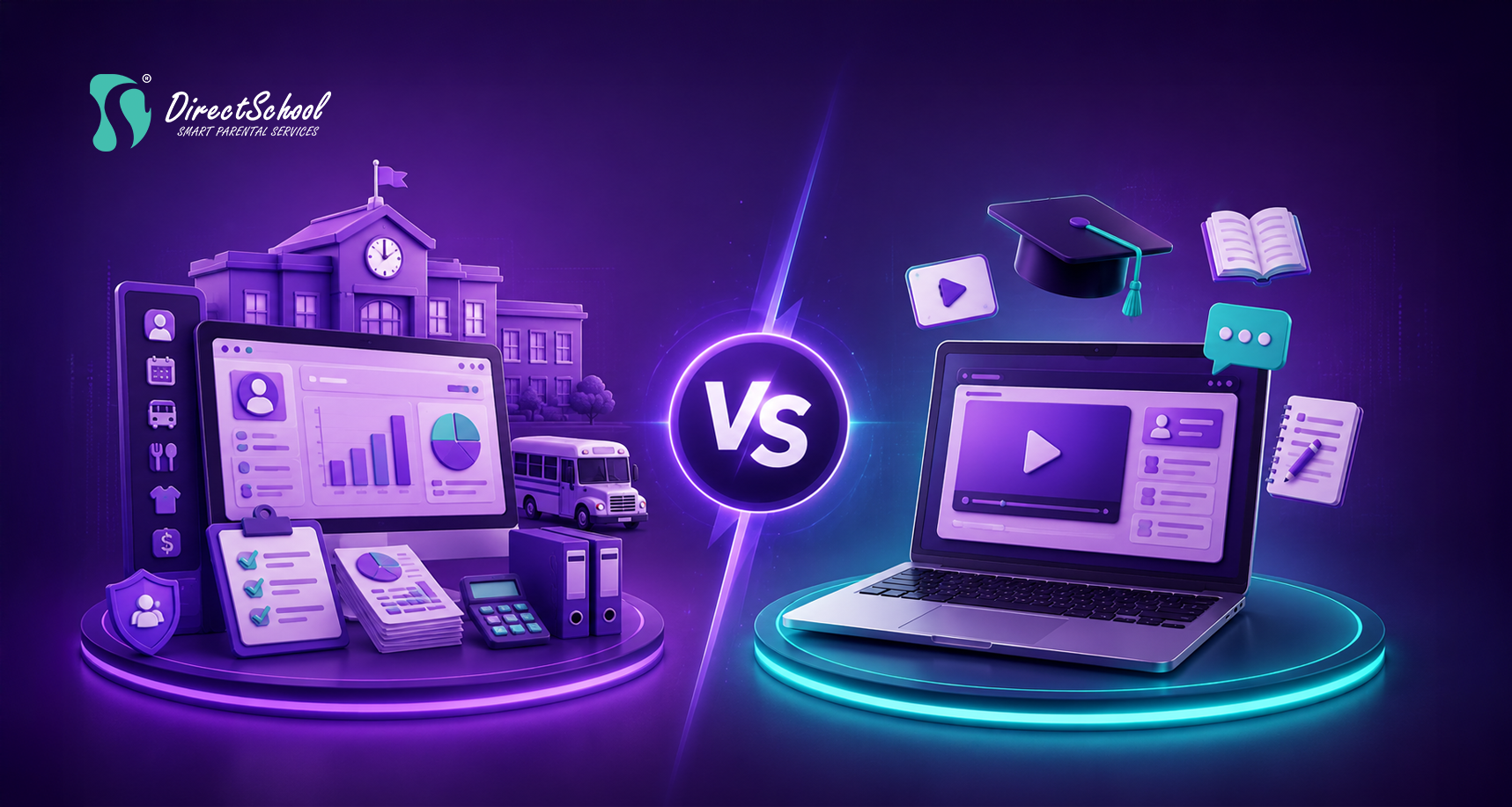
The Difference Between School Management Systems and LMS Platforms: The Complete Guide for Schools in 2026
As digital transformation continues to reshape the education sector, schools are increasingly adopting technology to improve administrative efficiency and enhance the learning experience. Among the most common terms in modern education technology are School Management Systems and Learning Management Systems (LMS).
Many school owners and administrators believe these two systems serve the same purpose. However, there are major differences between them in terms of functionality, goals, and overall impact on educational institutions.
If you are a school owner, principal, academic director, or IT manager looking to modernize your institution, understanding the difference between a School Management System and an LMS platform is essential before investing in any educational technology solution.
In this comprehensive guide, you will learn:
What is a School Management System?
What is an LMS platform?
School ERP vs LMS explained
Key features of each system
Which solution is best for your school
Can schools integrate ERP and LMS together?
How to choose the best education management platform
The future of digital transformation in schools
What Is a School Management System?
A School Management System (SMS) is a comprehensive software platform designed to manage administrative, operational, and academic processes within a school.
It acts as the digital backbone of the institution by centralizing school operations into one integrated system.
Modern schools use School Management Systems to streamline workflows, improve communication, reduce paperwork, and increase operational efficiency.
Main Features of a School Management System
Student Information Management
The system stores and manages student profiles, academic records, attendance, grades, disciplinary reports, and personal information.
Teacher and Staff Management
Schools can manage teacher schedules, payroll, performance evaluations, and staff records efficiently.
Attendance Tracking
A School ERP system automates attendance tracking and instantly notifies parents about absences.
Financial Management
The platform handles tuition fees, invoices, accounting, expenses, and financial reporting.
Parent Communication
A School Management System improves communication between schools and parents through notifications, messaging systems, and mobile apps.
Reporting and Analytics
Administrators can generate detailed reports and make data-driven decisions.
What Is an LMS Platform?
An LMS (Learning Management System) is a digital platform specifically designed to manage, deliver, and monitor online learning and educational content.
Unlike School Management Systems, LMS platforms focus mainly on teaching and learning processes rather than administrative operations.
LMS solutions became extremely popular with the rise of online learning, hybrid education, and virtual classrooms.
Main Features of an LMS Platform
Course Content Management
Teachers can upload lessons, videos, PDFs, assignments, and educational materials.
Online Exams and Assessments
LMS platforms allow educators to create quizzes, assignments, and online tests easily.
Student Progress Tracking
Teachers can monitor learner engagement, performance, and completion rates.
Virtual Classrooms
Most Learning Management Systems support live classes and online teaching sessions.
Automated Grading
Assignments and quizzes can be graded automatically.
Self-Paced Learning
Students can learn anytime and from anywhere at their own pace.
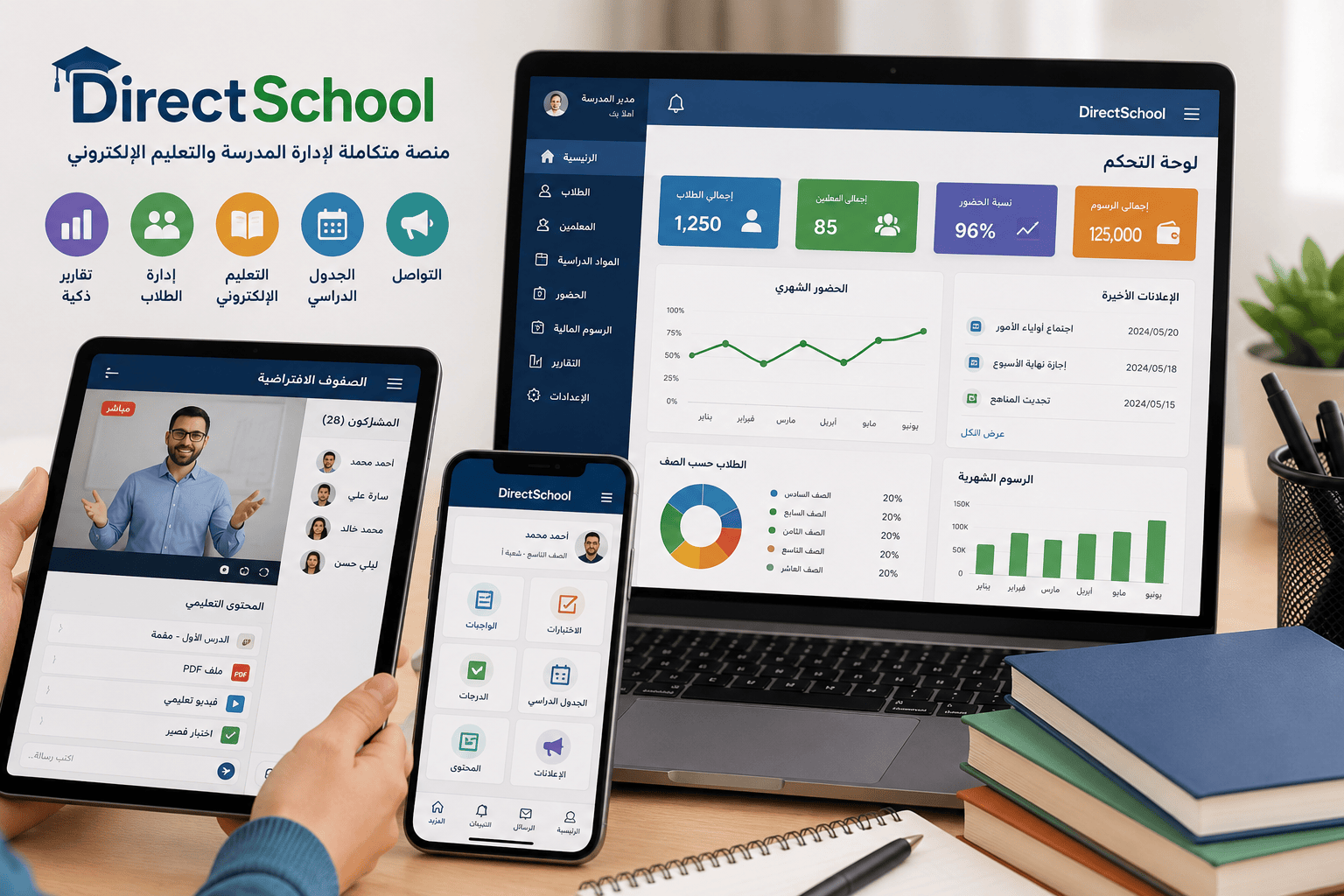
Difference Between School Management Systems and LMS Platforms
Understanding the difference between a School Management System and an LMS platform is crucial before selecting the right solution for your institution.
Here is a complete comparison:
Feature | School Management System | LMS Platform |
Primary Purpose | Administrative Management | Learning Management |
Main Users | Admins, Teachers, Parents, Students | Teachers and Students |
Fee Management | Yes | No |
Attendance Tracking | Yes | Limited |
Online Course Creation | Limited | Yes |
Virtual Classrooms | Sometimes | Yes |
Academic Content Delivery | Limited | Core Feature |
Financial Reports | Yes | No |
Student Assessments | Basic | Advanced |
Online Learning | Secondary | Primary Focus |
School Management System vs LMS: Which Is Better?
The real question is not which system is better, but which one best suits your school's needs.
If your school needs:
Student management
Financial operations
Attendance tracking
Staff management
Administrative reporting
Then a School Management System is the ideal choice.
If your institution focuses on:
Online learning
Virtual classrooms
Digital assignments
E-learning experiences
Then an LMS platform is more suitable.
Today, many modern schools combine both systems to create a fully integrated educational ecosystem.
School ERP vs LMS Explained
Many schools confuse School ERP systems with LMS platforms.
However, they serve completely different purposes.
School ERP Focuses On:
Administrative workflows
Financial operations
Human resources
Student information
Attendance and scheduling
LMS Focuses On:
Teaching and learning
Educational content
Online assessments
Student engagement
Virtual education
Simply put:
School ERP manages the institution
LMS manages the learning process
Why Schools Need a Modern School Management System
Digital transformation has become essential for educational institutions.
Traditional paper-based management methods are no longer efficient for modern schools.
Benefits of a School Management System
Improved Administrative Efficiency
Automating repetitive tasks saves time and reduces manual work.
Reduced Human Errors
Digital systems improve data accuracy and organization.
Better Communication
Parents, students, and teachers can communicate more effectively.
Faster Operations
Tasks that once required hours can now be completed in minutes.
Enhanced Parent Experience
Parents can monitor student progress and attendance in real time.
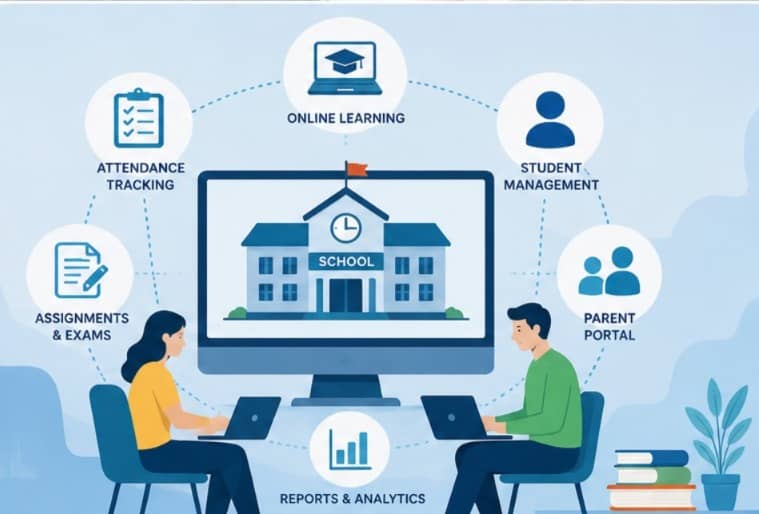
Benefits of Using an LMS in Schools
An LMS platform plays a critical role in modern education.
Key Advantages of LMS Platforms
Supports Hybrid Learning
Combines online and in-person education effectively.
Increases Student Engagement
Interactive learning tools improve participation.
Learning Anytime Anywhere
Students can access educational content remotely.
Personalized Learning
LMS systems help teachers tailor instruction to student needs.
Instant Feedback
Students receive immediate results and feedback.
Does Your School Need ERP or LMS?
The answer depends on your institution’s goals.
Your School Needs ERP If:
Administrative processes are inefficient
Student data management is difficult
Financial operations require automation
You need centralized school management
Your School Needs LMS If:
You offer online learning
Virtual classrooms are essential
You want digital assessments
You need a remote learning platform
Your School Needs Both If:
You aim for full digital transformation
You want integrated administration and learning
You seek better user experiences for students and parents
Can Schools Integrate ERP and LMS Together?
Yes, and this is becoming the standard approach for modern educational institutions.
Integration allows schools to:
Sync student data automatically
Connect schedules with online courses
Share attendance records
Improve operational efficiency
Create a unified digital ecosystem
Combining School ERP and LMS platforms offers the best of both worlds.
Advantages of Cloud-Based School Management Systems
Cloud technology has transformed the education industry.
Benefits of Cloud-Based Systems
Access From Anywhere
Users can log in securely from any location.
Better Security
Cloud providers offer advanced data protection.
Automatic Updates
Schools always access the latest features and improvements.
Lower Costs
No need for expensive local servers or infrastructure.
Scalability
Schools can easily expand the system as they grow.
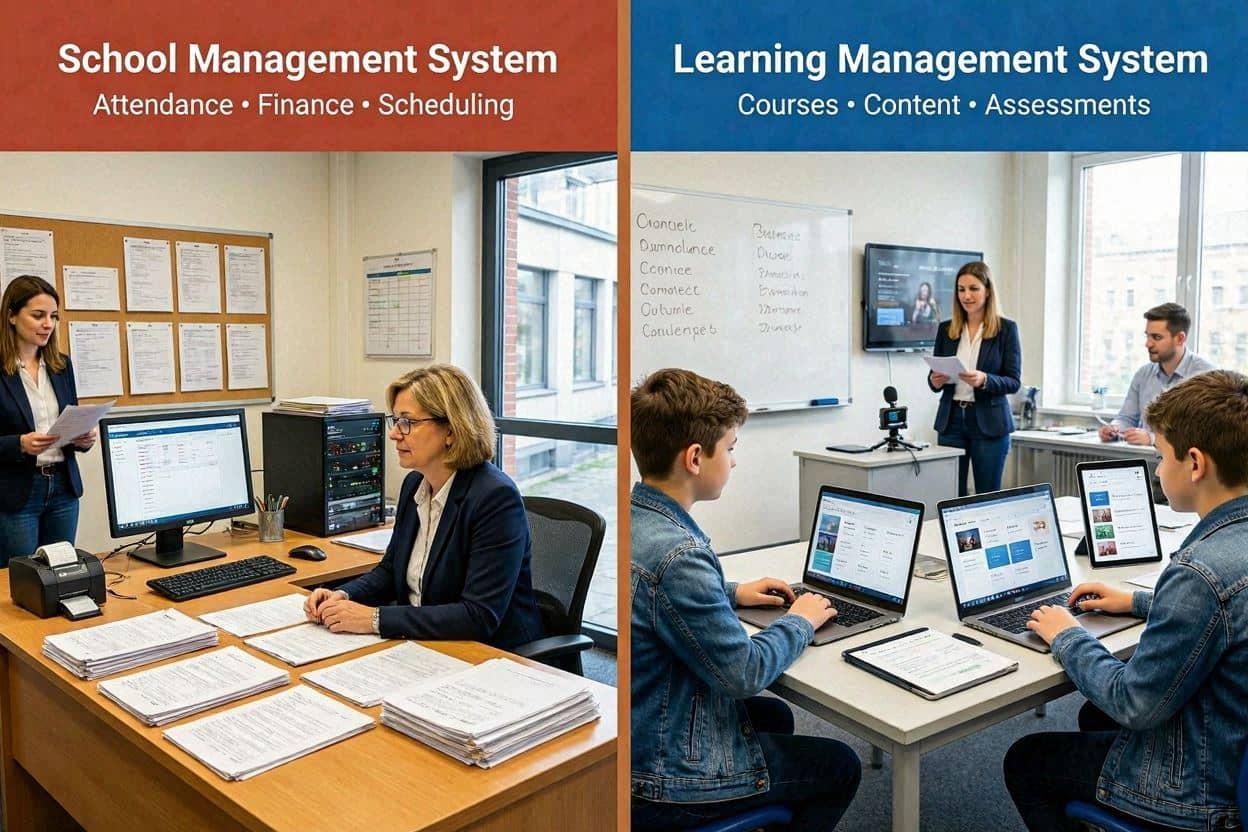
Best School Management Software in 2026
Choosing the right School Management Software requires careful evaluation.
Factors to Consider
Ease of Use
The platform should be user-friendly for staff and teachers.
Integration Capabilities
Support for LMS integration is highly valuable.
Technical Support
Reliable customer support is essential.
Data Security
The system must protect sensitive school information.
Flexibility
Customizable solutions work best for growing schools.
Smart Reporting
Advanced analytics improve decision-making.
How to Choose Between School Management Systems and LMS Platforms
Before selecting a platform, schools should ask the following questions:
What Are the School’s Goals?
Administrative improvement or digital learning?
What Is the School Size?
Large schools often require advanced ERP systems.
Does the School Offer Online Learning?
If yes, an LMS is essential.
What Is the Budget?
Costs vary depending on features and scalability.
Is Mobile Access Important?
Modern platforms should support mobile applications.
The Future of School Management and LMS Platforms
Educational technology continues to evolve rapidly.
Emerging Trends in 2026
Artificial Intelligence
AI-powered analytics improve student performance tracking.
Interactive Learning
Virtual reality and gamification are becoming more common.
Automation
Schools increasingly automate repetitive tasks.
Smart Analytics
Advanced reporting helps schools make predictive decisions.
Mobile-First Platforms
Mobile accessibility is now a priority.
Common Mistakes Schools Make When Choosing Software
Choosing Complex Systems
Overly complicated platforms reduce adoption rates.
Ignoring Technical Support
Poor support can create operational problems.
Focusing Only on Price
Cheap solutions may lack essential features.
Ignoring Scalability
Schools should choose systems that grow with their needs.
Neglecting User Experience
Simple and intuitive platforms achieve better results.
How Digital Transformation Improves Schools
Digital transformation helps schools:
Improve education quality
Reduce operational costs
Enhance communication
Increase productivity
Improve parent satisfaction
Deliver better student experiences
This is why School ERP and LMS platforms are now essential tools for modern education.
Why Modern Schools Use Integrated Platforms
Using separate systems often creates:
Duplicate data
Poor communication
Inefficient workflows
Increased operational errors
Integrated platforms provide:
Centralized management
Better collaboration
Unified reporting
Improved user experiences
The Importance of Attendance and Student Tracking Systems
Attendance tracking is one of the most valuable features of School Management Software.
Key Benefits
Real-Time Notifications
Parents instantly receive absence alerts.
Better Student Discipline
Attendance tracking improves accountability.
Detailed Reports
Administrators can identify attendance trends easily.
Early Problem Detection
Schools can quickly address attendance-related issues.
The Role of E-Learning Platforms in Modern Education
E-learning platforms have completely transformed education delivery.
Main Benefits
Flexible learning
Faster access to content
Interactive education
Reduced paperwork
Enhanced collaboration
Conclusion
Understanding the difference between School Management Systems and LMS platforms is critical for any educational institution planning digital transformation.
If your school needs administrative automation, student management, attendance tracking, and financial control, then a School Management System is the ideal solution.
If your focus is online learning, virtual classrooms, and digital education delivery, then an LMS platform is the better option.
However, the most successful schools today combine both systems to create a complete educational ecosystem that improves efficiency, learning outcomes, and user experience.
As technology continues to evolve, School ERP systems and LMS platforms will remain at the center of smart education and the future of digital schools worldwide.